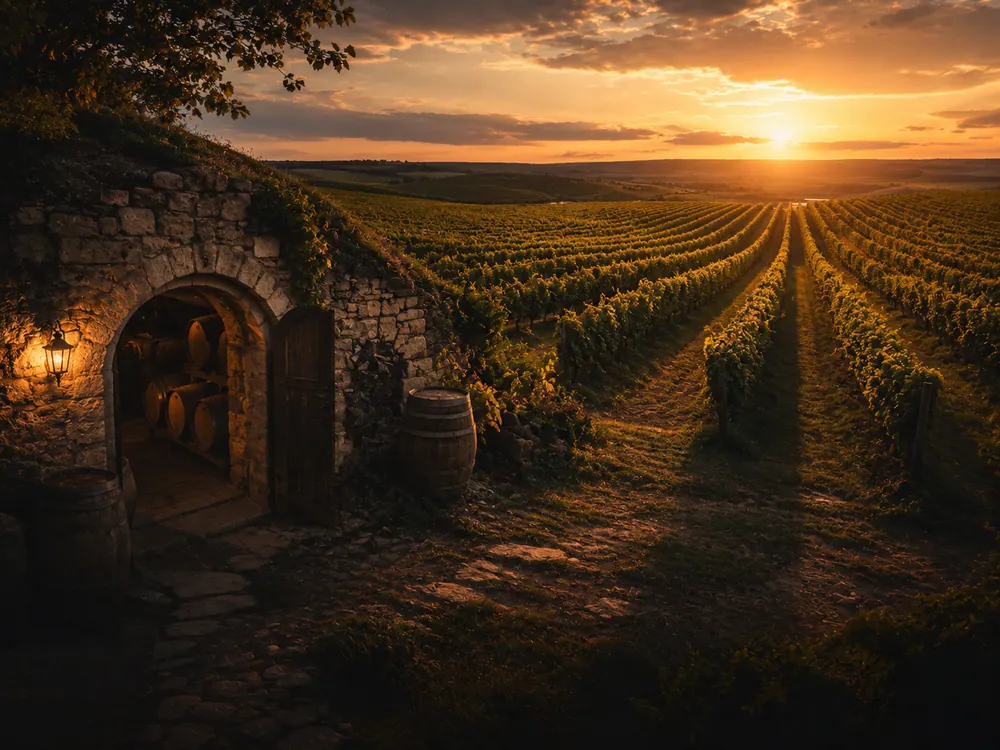
When somebody says "Moldovan wine", the first reflex is the reds of the south — Fetească Neagră, Rară Neagră, the blends from Purcari. Sparkling wine comes only third or fourth in the conversation. That is an injustice, because Moldova has exactly the condition the rest of the world builds artificially at great expense: kilometres of underground limestone galleries, at a constant temperature all year round.
Why the Moldovan underground works
A sparkling wine made by the traditional method needs three things: a clean, acidic base wine, a second fermentation in the bottle and time at a constant temperature. The third is the expensive one. Wineries in other countries invest in climate-controlled cellars to achieve that thermal stability.
In Moldova, the limestone does it for free.
At Cricova, sparkling wines are produced by the traditional method — the second fermentation takes place in the bottle, not in a tank — in underground limestone galleries where the temperature stays constant at 12–14°C all year round. The galleries are the former stone mines from which a good part of Chișinău was built; what remained after quarrying is an underground network with dozens of kilometres of tunnels, tens of metres below ground.
The practical result: the bottles mature without any technical intervention, in conditions a producer elsewhere would pay dearly for. This is not marketing, it is geology.
What "traditional method" means
It is worth clarifying, because the label matters.
The traditional method (also called classic): the base wine is bottled with yeast and sugar, and the second fermentation — the one that makes the bubbles — takes place in the bottle you buy. The bottle then sits for months or years on the lees, during which it gains texture and notes of bread, brioche and hazelnut. Riddling, disgorging and dosage follow. It is slow, it is expensive, and it is the method that gives sparkling wines with fine, persistent bubbles.
The Charmat method (or tank): the second fermentation happens in a large pressurised tank, after which the wine is bottled. It is faster, cheaper and better at preserving the primary fruit aromas. It is not "worse" — it has a different purpose.
In Moldova you will find both. When you want complexity and maturation, look for the traditional method. When you want freshness and fruit, Charmat is the right choice.
The varieties that matter
Moldovan sparkling wines are built on a handful of whites worth knowing by name:
Fetească Albă — an old native variety, with good acidity and a discreet, floral aroma. It is exactly what you want in a base wine for sparkling: it does not dominate, it structures.
Fetească Regală — livelier, more citrusy, with a grassy note. It gives the backbone to blends.
Chardonnay — the international variety that behaves well everywhere, and here too. It gives body and ageing potential.
Viorica — a variety created in Moldova, highly aromatic, with notes of basil, lime blossom and citrus. It is the most "Moldovan" in olfactory signature and, in a sparkling wine, gives something you will find nowhere else.
Details on each, with history and profile, are in the guide to native varieties.
Sparkling Party by Cricova
There is an event dedicated to sparkling wines, "Sparkling Party by Cricova", organised by the winery in the underground galleries. It is the sort of event held below ground, in a space that already looks like a film set.
The exact date is not confirmed and is announced year by year by the organiser. If you want to catch the next edition, follow the winery's official channels — we do not invent dates we do not have.
How to taste properly
A few things that visibly change the experience and cost nothing:
- Temperature: 6–8°C for young sparkling wines, a little warmer (8–10°C) for those matured long on the lees. Too cold means you taste nothing.
- The glass: the flat coupe is for photographs. Use a tulip glass or even a white wine glass — it concentrates the aroma and lets the bubbles rise.
- Pouring: tilt the glass, pour down the side. Straight into the bottom means foam and lost bubbles.
- The order: brut before demi-sec. If you start with sweet, the rest will taste sour.
The label terminology, from dry to sweet: brut nature (no added sugar), extra brut, brut, extra dry, dry, demi-sec, sweet. Counter-intuitively, "dry" is sweeter than "brut" — an old convention that confuses everybody.
What to drink them with
Brut sparkling wine is one of the most versatile wines at the table, and Moldovan cuisine gives it plenty of points of contact: the acidity and the bubbles cut through fat, which works with plăcinte (filled pastries), with salty cheeses, with fried fish.
The combination worth trying: brut sparkling wine with a warm cheese plăcintă. It sounds ordinary; it works perfectly.
Where to find them
A visit to Cricova is the most direct route — you descend into the galleries, see the bottles maturing, taste at source. It is about 15 kilometres from the centre of Chișinău and requires booking in advance.
But sparkling wines are not the monopoly of a single winery. Several producers on the map of Moldovan wineries have sparkling lines, with different approaches. If you want to compare several in a single day without driving after a tasting, organised tours solve the logistics too.
In Chișinău, a few restaurants with serious wine lists have local sparkling selections by the glass — the cheapest way to work out what you like before buying a case.
What we are not telling you
We are not giving you the founding years of sparkling wine lines, we are not listing medals and we are not giving prices. Awards change every year, prices likewise, and old information is worse than no information.
What remains true: the limestone, the constant 12–14 degrees, the traditional method and four white varieties worth looking for on the label.